
Knee pain is the most common injury affecting runners, with research showing that up to 40–50% of runners experience knee pain each year. If
your knee aches during or after a run, feels stiff on stairs, or flares up when you increase training, it’s rarely a “serious injury” — it’s usually a load and strength problem. At Musculo Health & Performance, we help runners identify exactly why their knee is overloaded and address the root cause so they can train consistently and confidently.
Training and load errors
Most running-related knee pain develops gradually from doing too much, too soon. Increasing kilometres too quickly, adding hills or speed work, or
running more frequently than your body is prepared for can exceed your tissue capacity. When this happens, the joints or tendons can become
overloaded and inflamed.
Hip strength and stability
Poor hip control allows the thigh to drift inward with each step, increasing compression through the front and outer knee. Over time, this added stress
contributes to common issues like patellofemoral pain and ITB irritation.
Hip and ankle mobility restrictions
Limited hip or ankle movement forces the knee to compensate. If the ankle can’t bend adequately or the hip lacks mobility, forces shift upward or
downward into the knee, increasing joint load with every stride.
Strength deficits in the calf, quad and hamstring
Your muscles act as shock absorbers. When they’re weak, the knee absorbs more force than it should. Reduced calf, quadriceps, or hamstring
strength means less control and higher stress through the joint, which often leads to pain during or after running.
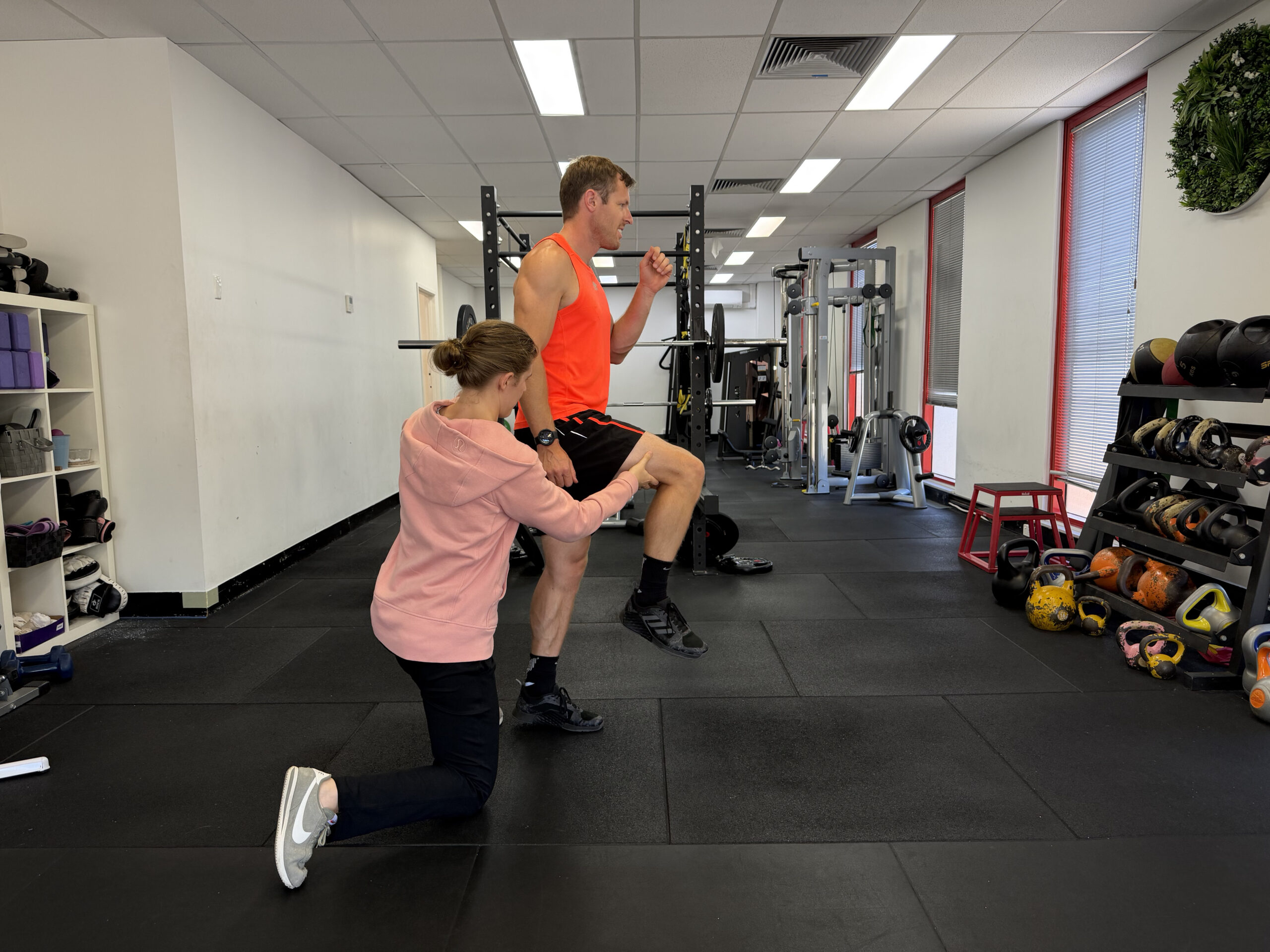
The key is identifying your specific limiting factor rather than guessing with random exercises. That’s why every runner at Musculo undergoes detailed
strength and range-of-motion testing. We use advanced performance technology from VALD to objectively measure strength, balance, power, and
asymmetries, giving clear data on what’s actually holding you back.
This allows us to create targeted rehab and strength programs that restore capacity, improve running efficiency, and reduce reinjury risk.
Treatment typically includes:
Individualised strength training for hips, calves, quads, and hamstrings
Mobility work to restore efficient movement
Running technique guidance
Smart training load planning
Gradual return-to-run progressions
This approach improves both pain and performance, helping you run stronger, rather than simply resting and hoping symptoms settle.
Consistent strength training and smart programming are the most effective ways to keep knees healthy long term. Regular physiotherapy check-ins,
movement assessments, and progressive strength work can help you stay ahead of issues and continue training without setbacks.
At Musculo Health & Performance, we help runners move better, get stronger, and stay pain-free for the long term.
Book a physiotherapy appointment for strength and range-of-motion testing.