
How exercise can help prevent and improve osteoporosis and keep you strong for life.
The right type of strength training can significantly improve bone density, reduce fracture risk, and help you stay active and independent for decades to come.
At Musculo Health & Performance, we regularly help people build stronger bones through targeted, physiotherapist-led strength training programs right here in St Kilda.
Bone density describes how strong your bones are.
Osteopenia is a mild reduction in bone strength.
Osteoporosis is more significant bone loss and increases fracture risk.
Because bone loss often has no symptoms, prevention is key.
Bone density naturally declines with age, but it happens faster with:
Hormonal changes (especially menopause)
Low activity levels
Loss of muscle strength
Time away from exercise
Certain medical conditions or medications (e.g. prolonged steroid use)
Bones adapt to stress. When you lift weights or load your body, your bones receive a signal to strengthen.
Research shows strength training can:
Slow or reverse bone loss
Improve muscle strength
Reduce falls and fractures
It’s one of the most effective tools we have for long-term bone health.
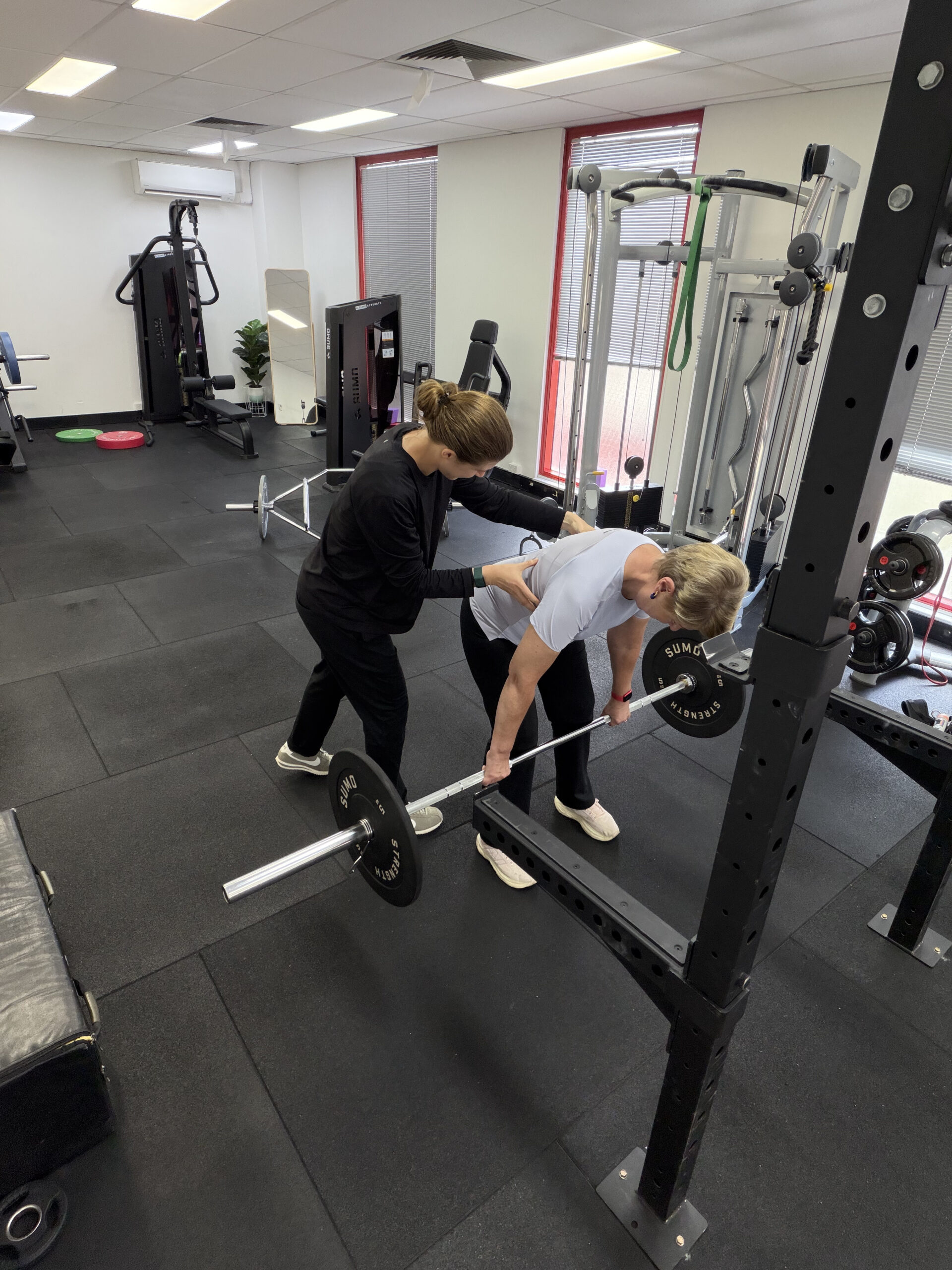
For bones to adapt, the load needs to be challenging. Studies suggest exercises should be performed at around 70% or more of your one-rep max
(1RM) — a weight you could lift roughly 8–12 times with good form.
Very light weights or walking alone aren’t enough.
This might include:
Squats or leg press
Deadlifts or hip hinges
Step-ups or lunges
Upper body pushing and pulling
Done progressively and with guidance, this type of training is safe and highly effective.
The goal isn’t lifting heavy for the sake of it — it’s providing enough stimulus for bones to get stronger.
We often see people:
only walking or cycling
using very light weights or bands
avoiding strength work out of fear
not progressing loads
Without progressive resistance, bones don’t change.
At our St Kilda clinic, strength training for bone health is delivered by a physiotherapist and guided by objective testing.
Programs include:
strength assessment using state of the art testing technology
personalised gym-based exercises
gradual progression
balance and falls prevention
ongoing tracking
If you’ve been diagnosed with osteopenia or osteoporosis — or simply want to stay strong as you age — strength training is one of the best things
you can do for your health.
If you’d like support getting started, book now – we’re here to help.