

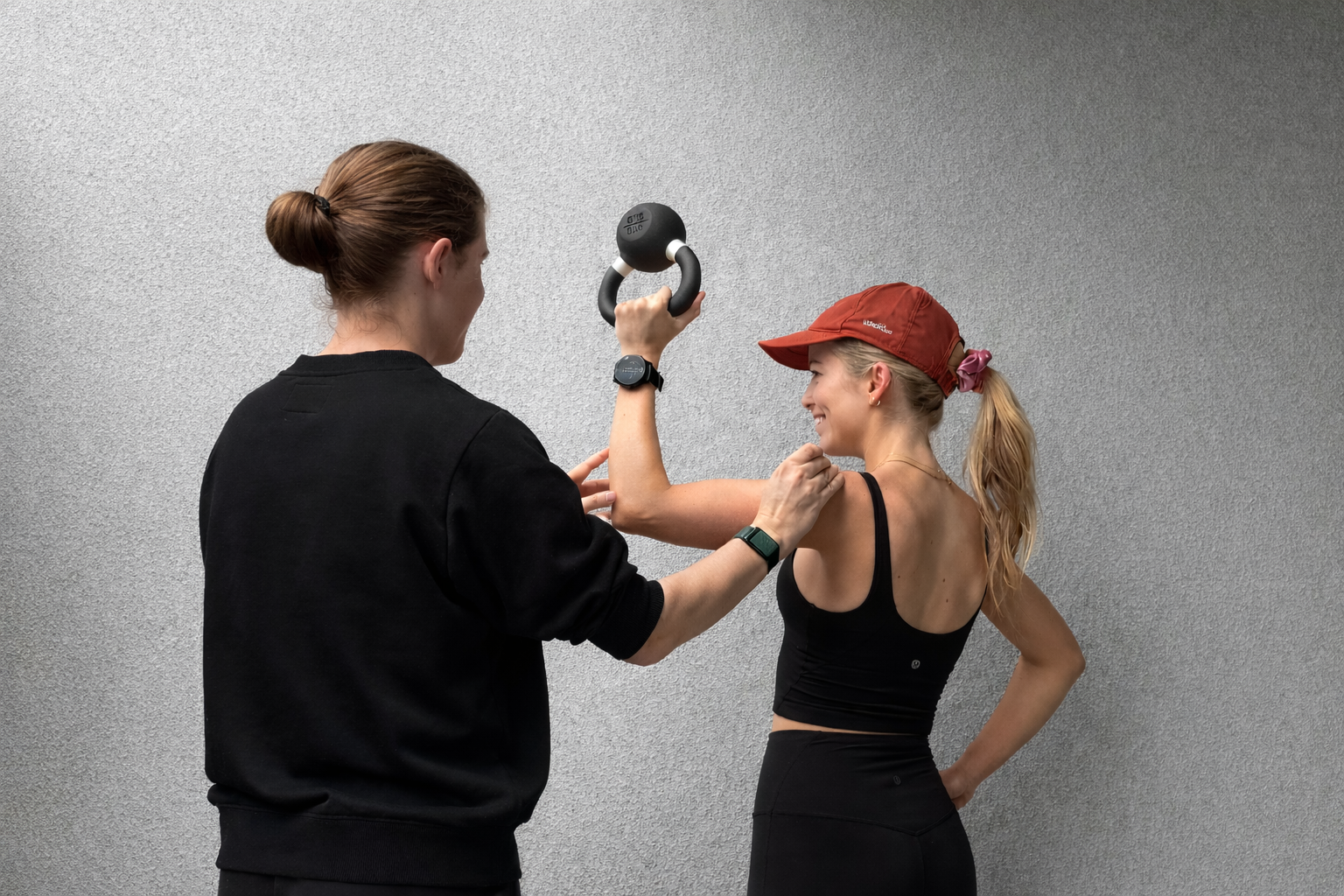
From pain with lifting to confident movement addressing the real cause of shoulder symptoms.
Shoulder pain is one of the most common musculoskeletal problems, with research showing that up to 1 in 3 people experience shoulder pain at some point in their life, and it accounts for a large proportion of sports and gym-related injuries. One of the most frequent diagnoses is rotator cuff related shoulder pain (RCRSP) — a broad term that describes irritation, overload, or reduced capacity of the rotator cuff tendons and surrounding structures, leading to shoulder pain.
At Musculo Health & Performance, we focus on identifying the underlying cause of shoulder pain so you can return to training, work, and daily activities with confidence.
The rotator cuff is a group of four muscles that stabilise the shoulder joint and control arm movement, particularly lifting and rotation. When these
muscles or tendons become overloaded, irritated, or weak relative to the demands placed on them, pain develops.
Importantly, this does not usually mean the shoulder is “damaged” in a serious way. In many cases, it reflects a mismatch between load and capacity
— meaning the shoulder is being asked to do more than it is prepared for.
Rotator cuff related pain is most commonly felt:
On the front of the shoulder (anterior shoulder) or outside of the shoulder (lateral shoulder)
Sometimes spreading down the upper arm toward the elbow
With movements above shoulder height
When lying on the affected side at night
Pain rarely travels past the elbow. If it does, other causes may need to be considered.
Shoulder pain can significantly affect both everyday life and sport. Common aggravating activities include:
Reaching overhead (cupboards, washing hair)
Dressing, particularly putting on shirts or bras
Lifting objects away from the body
Sleeping on the affected shoulder
Pushing up from a chair or bed
Gym pressing movements (bench press, shoulder press)
Pulling exercises (pull-ups, rows)
Throwing sports
Swimming
Racquet sports
Combat sports and boxing
Overhead lifting or Olympic lifts
Many people notice pain during activity initially, followed by increasing stiffness or aching afterwards.
Ultrasound or MRI findings often include:
Rotator cuff tendinopathy
Partial thickness tears
Bursal thickening or bursitis
Age-related tendon changes
These findings can sound concerning, but research shows that many people without pain also have these changes. Imaging does not always explain
symptoms. What matters most is how the shoulder functions — particularly strength, movement control, and capacity.
The underlying driver of shoulder pain is frequently related to:
Reduced posterior rotator cuff strength
Weakness in shoulder stabilisers
Limited thoracic extension (upper back mobility)
Reduced shoulder rotation range of motion
Load management errors in training or sport
Poor movement control under fatigue
At Musculo, we use advanced strength testing technology from VALD to objectively measure shoulder strength, asymmetries, and
function. This allows us to identify deficits that are often missed with standard assessment alone.
Objective testing helps:
Pinpoint the true cause of pain
Guide targeted rehabilitation
Track progress over time
Reduce reinjury risk
Support return to sport decisions
Most rotator cuff related shoulder pain improves very well with physiotherapy. Management typically includes:
Progressive strength training for the rotator cuff and shoulder muscles
Scapular control and stability work
Mobility exercises for the shoulder and upper back
Load modification to reduce irritation while building capacity
Gradual return to sport or gym training
Education to improve confidence and reduce fear of movement
Rest alone rarely solves the problem long term. Building strength and tolerance is the key to lasting improvement.
If shoulder pain is limiting your training, sleep, or daily activities, the right assessment and plan can make a significant difference.
Book a physiotherapy appointment for strength and movement testing to get a science-based assessment of why your
shoulder pain is occurring in the first place.